
Mad Angles and Urban Flow
Architect Jeffrey Daniels reflects on the KFC that became an LA landmark, designing for David Hockney, and the grand experiment of LACMA’s Geffen Galleries

One of Los Angeles’ most consequential architects recently reflected on more than thirty years of work—from the iconic Kentucky Fried Chicken on Western Avenue to the David Hockney house in the Hollywood Hills—and then turned his attention toward the city’s newest architectural lightning rod: the Geffen Galleries at LACMA.
Speaking with Jeffrey Daniels felt less like an interview and more like walking through a series of spaces with someone deeply attuned to how buildings shape emotion, memory, and movement. Again and again, he returned not to “style,” but to experience: the way architecture guides us through space, surprises us, and sometimes even changes how we perceive the world around us.
The KFC That Became an LA Landmark
Long before “starchitects” and Instagram-famous buildings became commonplace, Daniels and his former partner, Elyse Grinstein, were trying to solve a surprisingly simple problem: why did every fast-food building retreat from the street?
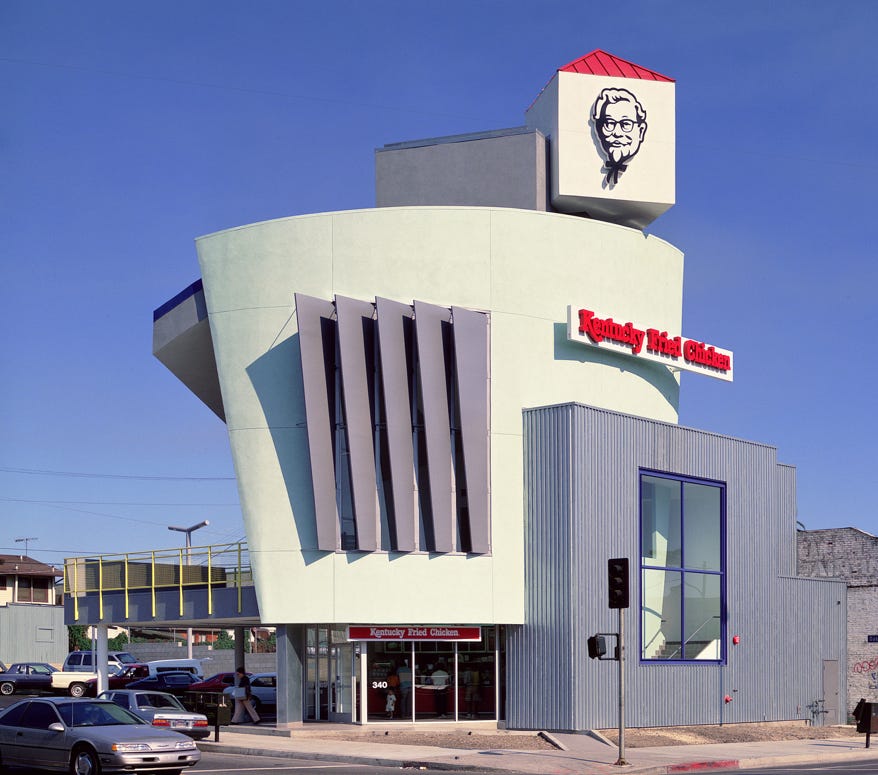
Built in the 1990’s as architects began to explore breaking free of purely angular lines, the Kentucky Fried Chicken on Western Avenue—now a beloved and improbable LA architectural destination—was designed in direct opposition to the suburban formula of parking lot first, building second. Daniels wanted the restaurant to participate in the city itself.
“So what we decided was: let’s make the building part of the fabric of the street and put the parking lot and drive-through behind.”
That idea of “fabric of the street” says a lot about Daniels’ architecture. Even a fast-food restaurant should engage with its site and how people move to, from, and around it in ways that engage them.
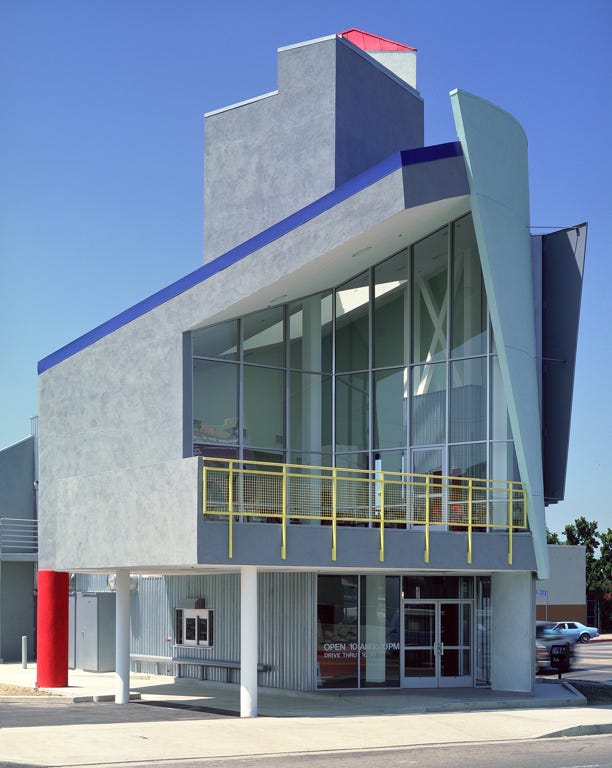
The flowing curved form of the building wasn’t meant to resemble a chicken bucket, despite decades of speculation. Daniels described the shape as an echo of movement itself—the sweep of cars turning the corner and flowing into the drive-through. Architecture here becomes kinetic, even cinematic.
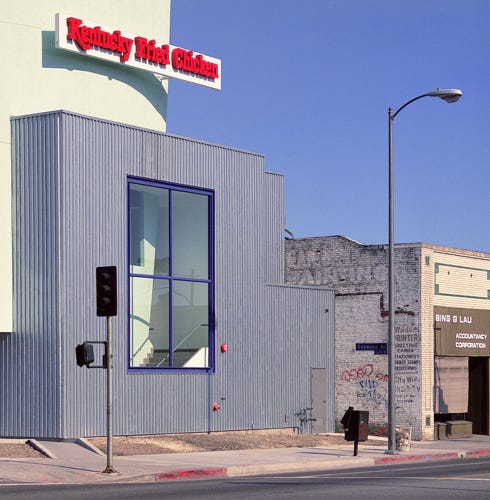
Inside, the exposed staircase became what Daniels called “a piece of theater.” Rather than treating circulation as merely functional, he transformed movement through the building into an experience of unfolding perspectives and changing viewpoints. That concern with movement, surprise, and emotional engagement would become a recurring theme throughout his career.
David Hockney and “A Few More Mad Angles”
If the KFC explored movement through the city, Daniels’ collaboration with David Hockney explored domesticated movement(s).
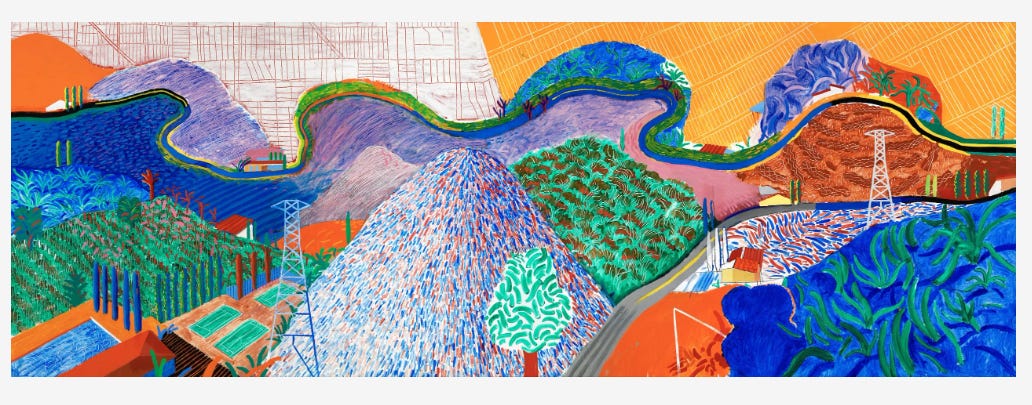
Hockney’s monumental Mulholland Drive painting—familiar to many visitors at LACMA—was tied to the geography surrounding his home and studio. Daniels explained that the house and the paintings emerged from the same creative moment, influencing one another in a kind of visual feedback loop. The vivid color pallet and patterns in both confirm the connection.
Initially, Daniels proposed something restrained and neutral: a loft-like artist retreat. Hockney immediately pushed back. “We showed it to him and in his most unmistakably Hockney way he said, ‘Do you think we could have a few more mad angles?’”
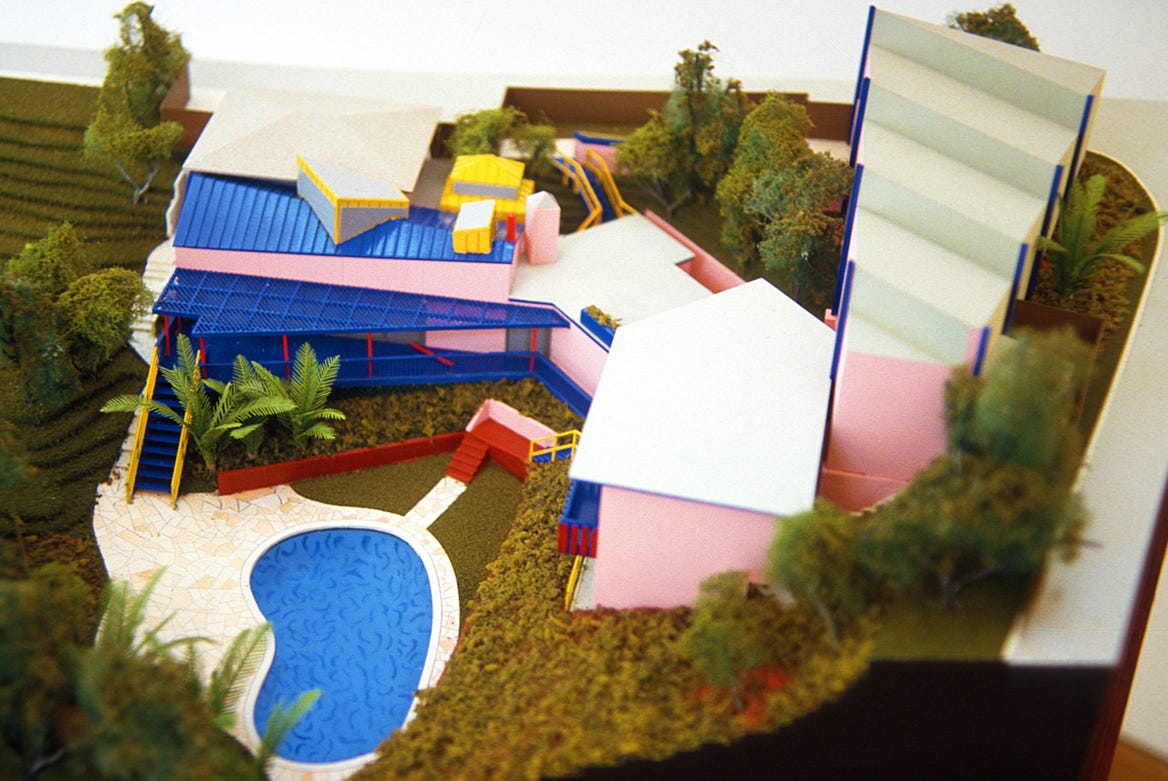
That request changed everything. Daniels described how Hockney was fascinated by what he called “reverse perspective.” Traditional Renaissance perspective sends lines away from the viewer into the distance. Hockney wanted the opposite: perspectives that converge toward you, destabilizing your sense of space.
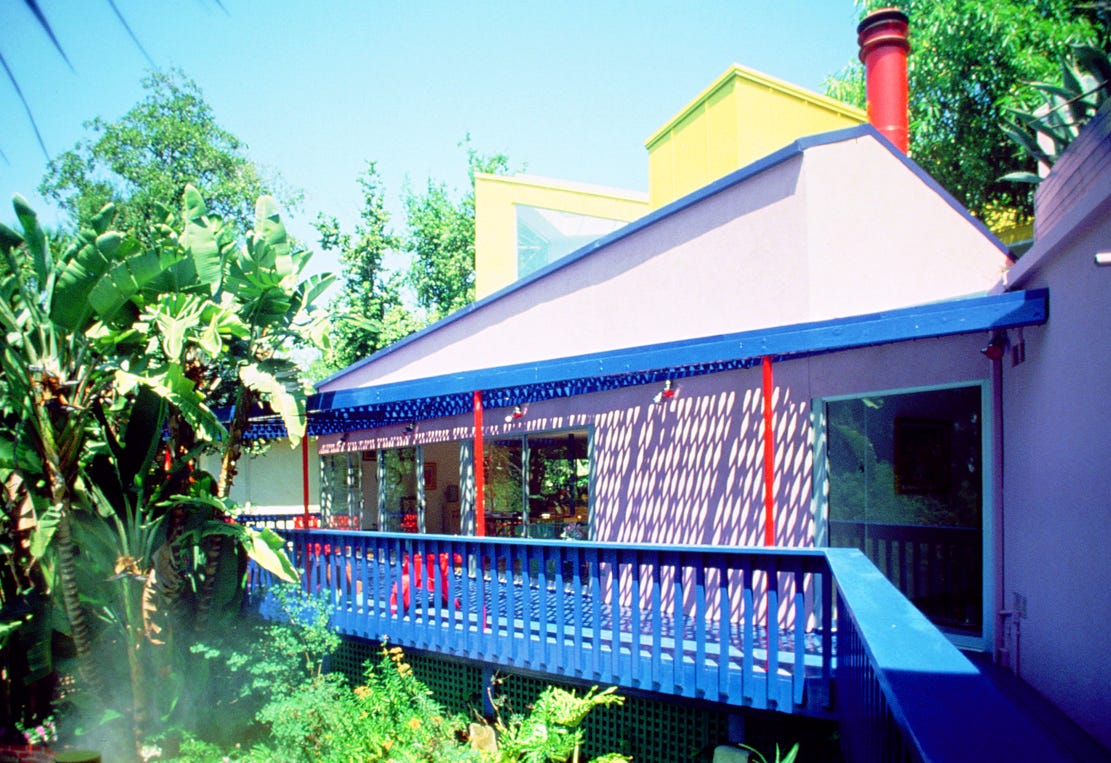
Daniels translated those painterly ideas into architecture through angled roofs, distorted decks, shifting geometries, and carefully orchestrated sightlines. “Part of this little bit of studied chaos was a way of providing that experientially as you walk around the building. Depending on where you stand, the perspective changes. The building reveals itself differently as you move through it.”
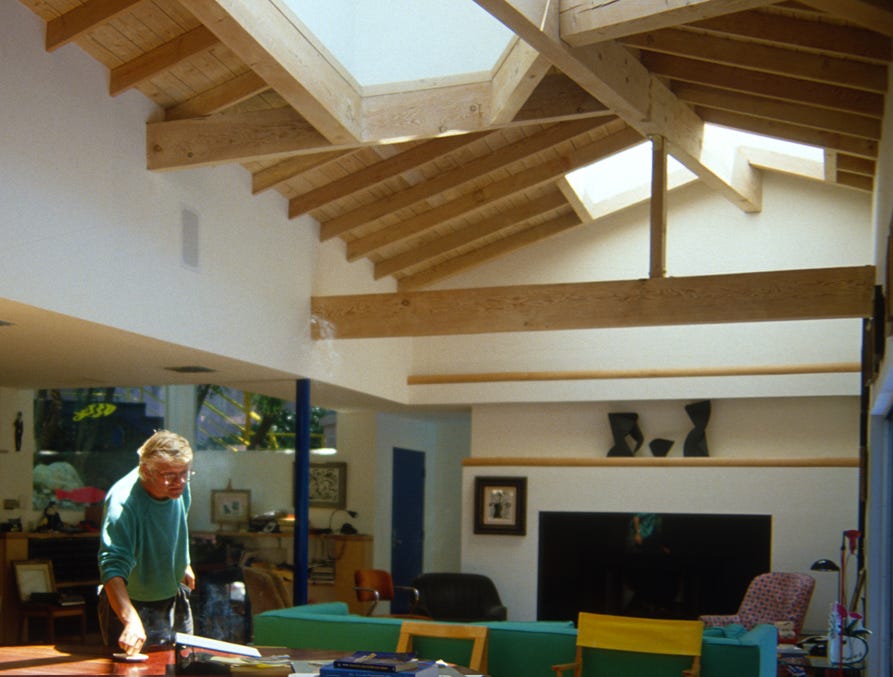
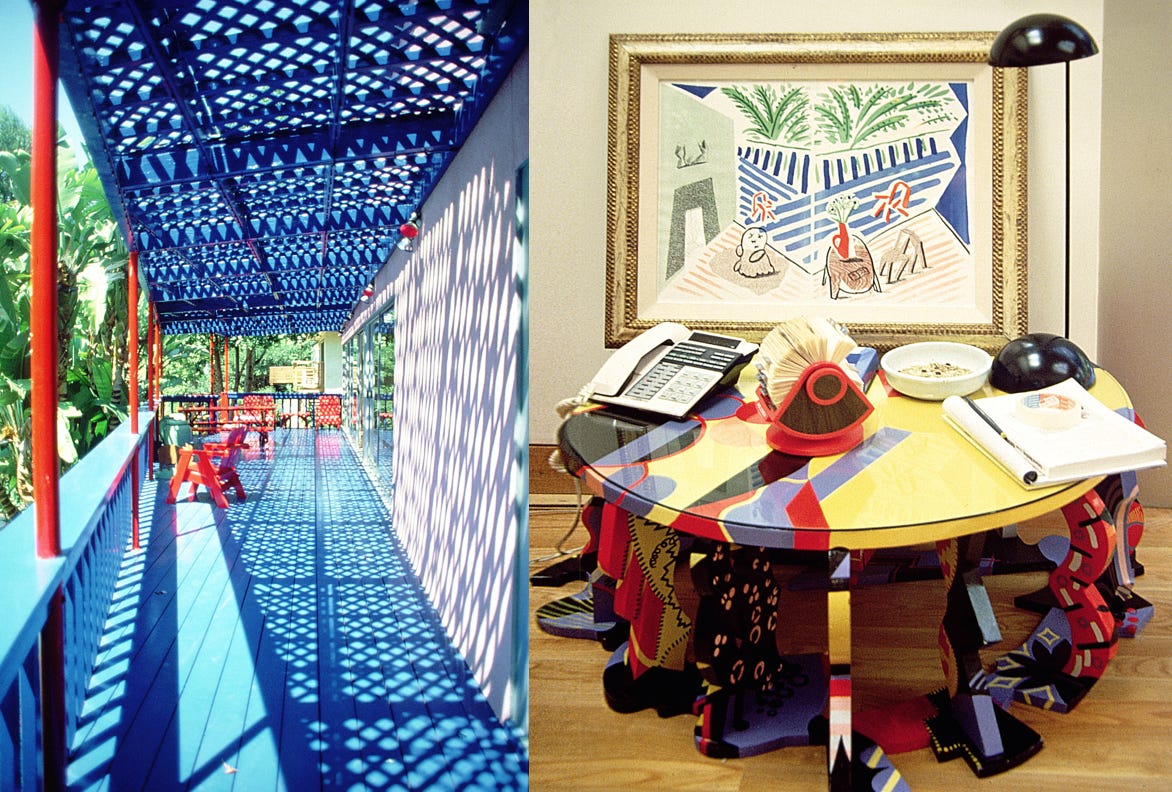
“The house very much grew out of what he was painting at the time…And then after the house was finally done and he was living in it, he made paintings of the new house. So it had this echo or ricochet effect of one bouncing off the other.”
The architecture was shaped by paintings, and then the work began to reflect the architecture that contained it.
The Geffen Galleries and the Future of LA Architecture
When our conversation turned to the new Geffen Galleries at LACMA, Daniels became both thoughtful and surprisingly cautious.
He resisted easy judgments. For him, the building represents a massive architectural experiment whose success cannot yet be determined by critics or architects alone.
“If it succeeds in attracting a new generation of LACMA audience, then it will be heralded as a masterpiece. If it doesn’t, it will be remembered as probably one of the most foolish buildings ever built. And that’s not up for me or anyone to decide, really. That’s going to be for the public to decide.”
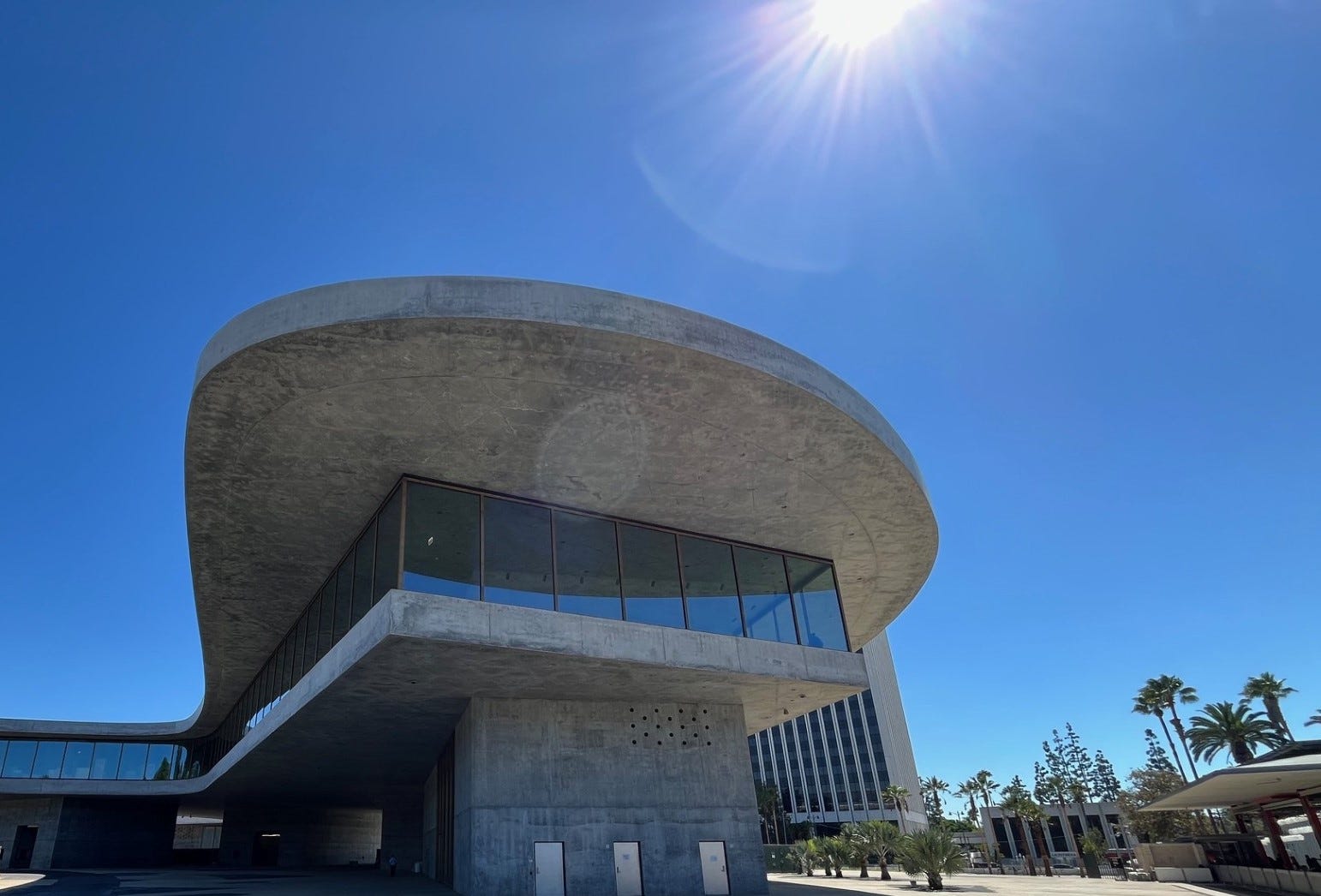
Daniels is skeptical of several core architectural decisions. He argues that the building intentionally rejects many traditional architectural principles: connection to site, vertical continuity, material refinement, and the use of natural light. He feels the building behaves less like architecture rooted in place and more like an autonomous object that suddenly appeared on the site. “It’s like a spaceship that just came from outer space and landed there. Maybe one day it will return, who knows?”
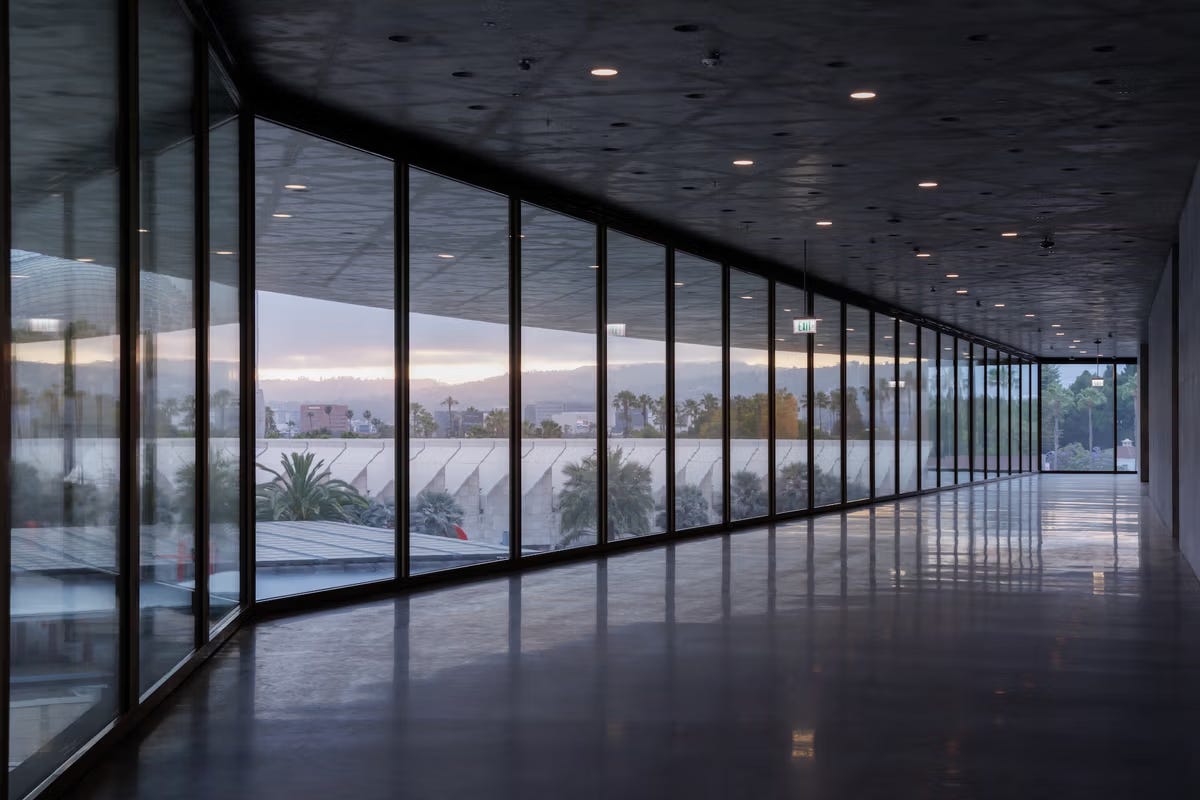
One of his strongest critiques concerns light and atmosphere. Daniels is struck by “the unnecessary gloominess of the interior spaces.” For him, the darkness is not a technical requirement for preserving art, but an aesthetic choice. He contrasts this with museums like Bilbao, where natural light becomes a central emotional component of the experience.
Personally, I actually quite like the interior darkness and the way it sets off the art within. In fact, some of my favorite galleries are the ones with dark interiors and the low entrances. One feels like an explorer entering a sacred tomb established in a different space and time. I think there is an emotional experience to be had there as well. We will keep debating that.
While critical of some features, Daniels is careful not to dismiss the project outright. He recognizes that younger audiences may connect with it differently than he does. “One writer compared the organization of the exhibits to scrolling through Instagram. And I thought that was very interesting because that is kind of how it felt to me.” Rather than treating this as purely negative, he acknowledges that this fragmented, associative, non-hierarchical way of moving through art may resonate deeply with contemporary audiences.
Bringing it All Together
For Daniels, architecture ultimately succeeds not because it looks impressive from afar, but because it creates emotional experiences from within.
That may explain why our conversation eventually drifted into broader questions about AI, emotion, and the future of creativity. Daniels imagines a world where architects increasingly “curate” possibilities generated by machines rather than directly drawing every line themselves.
And yet he believes something fundamentally human remains at the center of architecture: surprise, emotional resonance, and the strange magic of moving through space. In the end, what stayed with me most was Daniels’ belief that architecture matters because it changes how we feel while inhabiting the world around us.
Check back next week with a follow up post where we explore Daniel’s perspective on the emotional resonance of great architecture and what we might expect from a future of AI-driven design.
What a wonderful interview! You made all three so accessible - KFC, Hockney (Love Mulholland Drive painting and his home BTW), and LACMA situation. I would sum up his perspective on work and life that Form is over Function or maybe precedes or creates or transforms function. Look forward to part two!
What an interesting piece…can’t wait for the next one.